

When clients get frustrated
What it brings up in us and how we can respond

It doesn’t happen in every session but perhaps more often than we talk about.
You say something, gently challenge, explain what’s possible and what isn’t…
Then you feel it. The shift. A moment of tension.
Your client becomes frustrated.
Sometimes it’s obvious, like a sharp reply or a heavy sigh.
Other times, it’s more subtle. A quiet shutdown. A clipped ending. A change in energy.
Either way, it can be enough to knock us off course.
Why it affects us
For psychological practitioners, especially in low-intensity roles, a frustrated client can feel especially challenging. We are often trained to focus on being helpful, supportive, and encouraging. When someone is clearly dissatisfied, it can stir up difficult feelings.
We also tend to be working under pressure, within limited systems, and with a strong desire to offer meaningful support. So when someone responds with frustration, it can feel very personal, even if it isn’t.
You might notice defensiveness: “I’m doing my best.”
Or guilt: “Maybe I didn’t explain that properly.”
Or shame: “Am I even good at this?”
Or resentment: “Why am I being blamed for something I can’t control?”
If we don’t acknowledge what these responses bring up in us, they can start to impact how we show up with clients and in our work.
When frustration is left unspoken
It’s natural to want to move past uncomfortable moments. To shift the conversation, explain more clearly, or soften the impact with reassurance. But when we do this without exploring what’s happening, frustration doesn’t disappear. It lingers, in the room or over the phone. And it becomes a barrier to connection and collaboration.
This is where we can come back to what we know: emotions are information.
We would never normally encourage a client to ignore a difficult feeling. We would help them pause, explore, and reflect. The same can apply here. If a client feels frustrated, there may be something valuable underneath it. And if we feel unsettled in response, that might hold useful information too.
What client frustration might be telling us
Frustration is often a sign that something matters deeply to the client. It may point to something feeling unfair, stuck, or out of reach. There is often an underlying emotion trying to make itself known.
Fear: “What if nothing helps me?”
Hopelessness: “I’ve been through this before and it didn’t work.”
Loss of control: “I hate that I need help.”
Injustice: “Why is it so hard to get the support I need?”
In many cases, the frustration isn’t about you. It is about the broader context they are navigating, and how it is showing up in the therapeutic space.

Responding with care and clarity
It can feel tempting to over apologise, over explain, or to ignore what happening. But these responses rarely help to resolve what’s happening. What often helps more is a calm and grounded response that holds space for the emotion and gently invites reflection.
Here are some phrases that can be helpful:
“I can hear this feels really frustrating. Would it help to talk it through?”
“I might not have got that quite right. Do you want to say a bit more?”
“This doesn’t feel fair, does it?”
“It’s okay to feel annoyed about this. Can we talk through what’s happening for you right now?”
These kinds of responses do several things. They acknowledge the emotional truth of the moment. They show that we are not threatened by the client’s reaction. They invite the client to reflect on their experience in a safe way. And they help protect the therapeutic relationship, even in moments that feel uncomfortable.
Looking after ourselves
We also need to recognise that our own frustration is valid. When you have been holding boundaries all day, offering empathy, and saying “no” more than you would like, another layer of client dissatisfaction can feel like too much.
When you are already tired, when your own capacity is low, or when you feel like you are working within a system that limits your ability to help, it is easy to take things personally.
You do not have to absorb everything. And you are allowed to feel something about it. That might mean bringing it to supervision, reflecting with peers, or simply naming it to yourself so that it doesn’t build up over time.
What it helps to remember
Frustration is not a sign that something has gone wrong. It is a sign that something is important.
The presence of frustration does not mean the work is failing. It can be part of what makes the work real and meaningful.
Clients are allowed to be frustrated. So are we.
Our role is not to avoid difficulty, but to meet it with skill, care, and humanity.
The most effective response is likely to be holding the space without taking it personally.
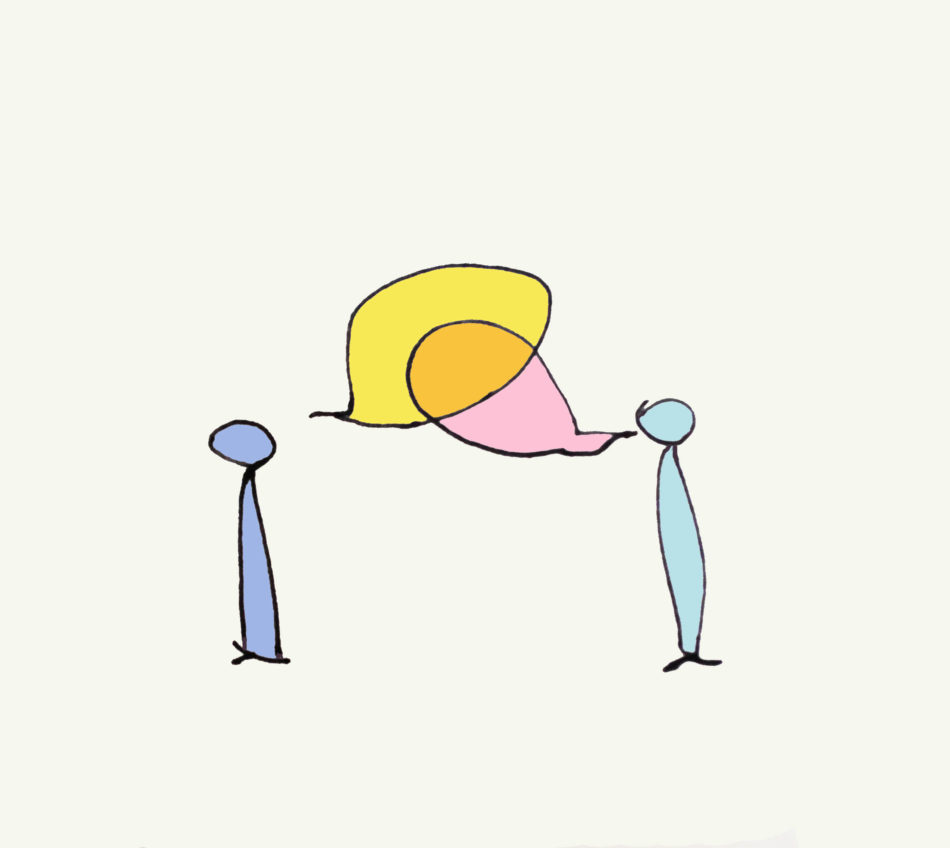
ART EVERY DAY NUMBER 362 / ILLUSTRATION / STRANGERS - Janet Bright
What about you?
I’d love to hear your thoughts.
Have you ever felt thrown by a client’s frustration?
What helped you in the moment or make sense of it afterward?
What do you wish we talked about more when it comes to emotional reactions during sessions — ours or our clients?
Pop a comment below if anything resonated, or if you’ve got a story, question or reflection to share.